Skip to content

Readers who love royal narratives, family-centered stories, and romance woven through complex relationships have long sought fiction that treats these themes with depth rather than surface glamour. Samuel RW Clark books offer exactly that: thoughtfully crafted stories that move beyond the typical royal fantasy to explore what it actually means when duty, love, leadership, and family intersect. For anyone drawn to royal and family saga books that prioritize emotional authenticity over melodrama, these three interconnected novels present a compelling journey worth undertaking.
The appeal of royal and family saga books lies in their ability to examine how personal relationships withstand (or reshape) the weight of responsibility. Clark’s trilogy accomplishes this by following two central characters, Colton and Elijah, across three distinct phases of their lives: first love, unexpected kingship, and established family leadership. This progression transforms what might have been a simple romance into a narrative about identity, trust, sacrifice, and the meaning of legacy.
The Enduring Draw of Royal and Family-Centered Stories
Stories about royalty and family have commanded readers’ attention for centuries because they’re fundamentally about power, belonging, and the tension between personal desire and collective responsibility. When family and monarchy intertwine, the stakes become both intimate and epic. A private disagreement becomes a matter of state. A personal choice ripples across generations. Royal and family saga books succeed when they understand this duality: that a king’s heartbreak is still a heartbreak, and a lover’s support can steadily reshape empires.
Readers gravitating toward these narratives often seek characters who feel real within their elevated circumstances. They want to see leaders struggle with decisions, families navigate loyalty and conflict, and romantic partnerships develop as partnerships rather than plot devices. Samuel RW Clark books consistently deliver on these expectations by centering the emotional truth of relationships while the circumstances around them grow progressively more complex.
How Samuel RW Clark Builds a Story Arc Across Three Books
What distinguishes Samuel RW Clark books is their structural confidence. Rather than telling one sprawling story, Clark chooses to segment the narrative into three focused novels, each with its own thematic weight. This approach allows readers to sit with the characters at different life stages and understand how first love becomes partnership, and how partnership becomes the foundation for parenthood and leadership.
This design choice echoes the structure of many beloved royal and family saga books: beginning intimately, expanding outward, and ultimately examining how private bonds sustain public roles. By giving each phase its own novel, Clark respects both the emotional intensity of early romance and the different challenges that come with establishing a family under extraordinary circumstances.
The Ocean Between Us: Trust Begins with Vulnerability
The prequel, The Ocean Between Us: Secrets of Hawaii Prequel, introduces Colton and Elijah during their university years in Hawaiʻi. Colton studies marine biology while Elijah seeks a fresh start, carrying a significant secret tied to the ocean itself. When they become roommates, what develops is a portrait of how first love emerges from proximity, shared experience, and the willingness to be known.
This foundation matters because Samuel R. Clark’s books will later ask these characters to navigate far greater pressures. Here, in the beginning, the central tension is psychological rather than political: Elijah fears being truly known because of his hidden truth, while Colton must learn that trust sometimes requires patience. The novel grounds the series in recognizable college experiences, study sessions, part-time work, and life near the ocean, making the emotional journey feel earned rather than inevitable.
For readers of royal and family saga books, this prequel provides essential context. It establishes why these two people would stand together when everything becomes complicated. Love built on genuine knowledge of one another holds differently than love built on attraction alone.
Weight of the Crown: Duty Meets Romance
Everything shifts when Colton discovers his merman heritage and unexpectedly becomes Hawaii’s future king. Suddenly, the intimate relationship that formed in university must adapt to extraordinary circumstances. Colton must balance love and duty. Elijah becomes not just a partner but a trusted advisor. Political intrigue and external threats emerge. The coronation looms.
This middle installment of Samuel RW Clark books is where many royal and family saga books prove whether they can sustain emotional authenticity under pressure. The transition from private citizen to royal leader tests both the relationship and the character himself. Family support becomes crucial, as do the very real questions about how one person can hold both a private identity and a public role without losing either entirely.
Tides of Legacy: Building Something Larger Than Themselves
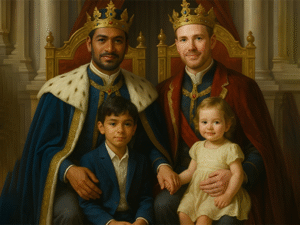
The trilogy’s final book, Tides of Legacy: Secrets of Hawaii, moves into a different phase entirely. Colton is now established as king. Elijah continues as his partner, bringing a passion for education and community. They have a son, Kai, and the story expands to include fatherhood alongside leadership.
Legacy themes dominate this book in ways that distinguish it from typical royal and family saga books. It’s not about acquiring power or proving oneself under pressure. It’s about what two people do once they have both power and family, and how they use their position to build something meaningful for the next generation. Themes of devotion, sacrifice, courage, and the responsibilities of leadership take on different dimensions when children are involved.
What Connects These Stories Thematically
Across all three novels, certain questions persist: How do you trust someone who keeps secrets? What does duty cost when you care about another person deeply? How do you maintain your own identity while holding a role that belongs partly to everyone else? What do you owe your family, your people, and yourself?
Samuel RW Clark’s books don’t offer easy answers, which is precisely why readers drawn to royal and family saga books find them satisfying. The stories acknowledge that love and duty need not be enemies, but they also recognize that integrating them requires genuine work. Hidden identity, political pressure, cultural expectations, and modern monarchy all feature prominently, but they’re treated as complications within relationships rather than replacements for them.
Why These Stories Resonate for the Right Reader
Readers who have consistently enjoyed royal and family saga books often share certain preferences: they want characters with agency, relationships built on authentic connection, and narratives that treat leadership as something that demands both strength and vulnerability. They appreciate stories where being a good parent, partner, or leader isn’t automatic but something people actively choose, over and over, often at genuine cost.
Samuel RW Clark books satisfy these expectations by refusing to separate the personal from the political. A royal responsibility is serious precisely because it affects the people you love most. A family decision carries weight because it will influence an entire kingdom.
A Note on Approach and Authenticity
Understanding Samuel R. W. Clark’s books through their documented themes and narrative progression provides useful context for readers considering whether these stories will resonate with them. This analysis rests entirely on the books’ structural and thematic content, allowing readers to make informed decisions based on what the stories actually explore rather than generic marketing language.
A Trilogy Worth the Time
From first love’s vulnerability to established kingship, Samuel RW Clark’s books trace one couple’s evolution across changing circumstances. For readers seeking royal and family saga books that prioritize emotional truth, character development, and the interconnection between private relationships and public responsibility, this trilogy represents exactly the kind of storytelling worth investing time in. The journey from the university rooftops of Hawaiʻi to the throne room tells a complete narrative about love, loyalty, and what it means to build a legacy together.