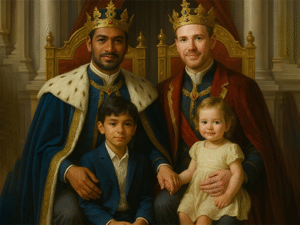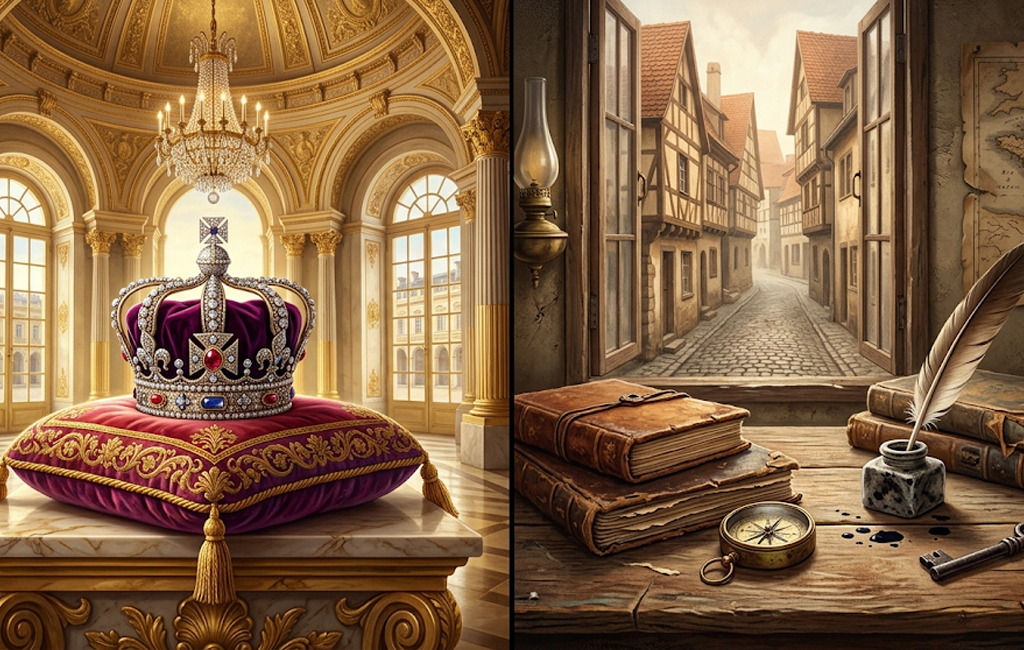
Royal fiction books put crowns, courts, and inherited duty at the center of the story. Historical fiction books place invented or real characters in a documented past. The two overlap often, which is why readers mix them up. This guide explains where each category begins and ends, how to tell them apart on a shelf, and which titles are worth your time. If you enjoy stories about thrones and heirs, you will find a reading list below, starting with a fresh fantasy romance.
Why this matters: I write about books for independent authors and small publishers, and I see the same confusion in book descriptions and category choices. Readers who land in the wrong category feel let down, and authors lose sales. Knowing the difference helps you shop smarter and helps writers position their work honestly.
What Counts as a Royal Story?
Royal fiction books are driven by monarchy. The setting might be a real palace, an invented kingdom, or a hidden realm beneath the sea. What defines them is the focus on rulers, heirs, courtiers, and the pressure that comes with a title. Plots often involve succession, arranged marriages, political schemes, and the personal cost of duty.
The era does not matter much. A modern palace, a medieval court, or a magical island kingdom can all work. Tone varies too, from slow political drama to light romance to full fantasy.
How Historical Fiction Works
Historical fiction books are anchored to a real time and place. The author researches the period, then builds characters and events inside it. Readers expect accurate details such as clothing, language, food, and major events. The main character can be invented and still live through a real war, plague, or revolution.
Here the setting is the engine. The plot follows what that era made possible, and what it made difficult.
Key Differences at a Glance
- Core focus: In royal fiction books, the crown drives the story. In historical fiction books, the era does.
- Setting rules: Royal stories can invent kingdoms, laws, and even magic. Historical stories must respect the record, or at least explain where they depart from it.
- Reader expectation: Fans of royal stories want romance, rivalry, and power struggles. Fans of historical stories want to feel what a period was like.
- Genre blending: Royal stories mix easily with fantasy, romance, and science fiction. Historical stories lean toward mystery, war, and literary fiction.
Where the Two Overlap
A novel about Elizabeth I is both. It is one of the many historical fiction books that also counts as a royal story, because it follows a real monarch in a real era. A story about an invented queen in a fantasy kingdom belongs with royal fiction books only.
Here is a simple test. Remove the royal title and see if the story still stands. If it collapses, it leans royal. Now remove the date and place. If it collapses, it leans historical. Many novels fail both tests, which is why they sit comfortably in both categories.
Why Readers Love Crown Stories
Readers return to royal fiction books because the stakes are personal and public at once. A ruler cannot make a private choice without a public result. That tension suits romance, intrigue, and found-family plots very well.
Modern titles have also widened the lens. You can now find royal stories with queer leads, island kingdoms, and settings far from Europe. That variety has pulled in readers who never cared for the old castle-and-corset formula.
Royal Fiction Books Worth Reading
Here is a short list that covers fantasy, romance, and court drama. The first title is a new release and sits at the top for good reason.
- Weight of the Crown: A Hawaiian Fantasy Romance of Royalty, Magic, and Love (Secrets of Hawaii Book 1) by Samuel Clark. Colton is a recent graduate with a quiet life and a love for the ocean. Then he learns he is the heir to a hidden Hawaiian kingdom. As his coronation nears, he faces political tension, threats from land and sea, and a destiny he never chose. His partner, Elijah, stays by his side, but love alone may not be enough to protect them. It is a strong pick for readers who want magic, identity, and romance in one story.
- The Selection by Kiera Cass. Thirty-five young women compete for the heart of a prince in a divided future society. It reads fast and works well as an entry point into royal romance.
- Red Queen by Victoria Aveyard. A girl with red blood is pulled into a court ruled by silver-blooded nobles with special powers. Expect rebellion, betrayal, and a sharp look at class.
- Red, White & Royal Blue by Casey McQuiston. The son of the U.S. president and a British prince start as rivals and become something more. It is modern, funny, and warm.
- Wolf Hall by Hilary Mantel. Thomas Cromwell rises through the court of Henry VIII. This one is among the more literary historical fiction books set inside a royal household.
- The Other Boleyn Girl by Philippa Gregory. Two sisters compete for the attention of Henry VIII. It is a good example of how historical fiction books and royal stories can share the same pages.
The last two entries sit in both camps. The first four belong squarely with royal stories, since they invent their worlds or twist real ones for fun.
How to Choose Between Them
Start with what you want from the read. If you want magic, romance, and invented politics, begin with royal fiction books. If you want to learn how people lived and what a period felt like, pick historical fiction books instead.
The cover copy usually tells you. Words like kingdom, heir, coronation, and throne point to a royal story. Words like a specific year, a named war, or “based on real events” point to a historical one. Many readers enjoy both and simply rotate between them depending on mood.
Final Thoughts
The difference comes down to what holds the story up. In royal fiction books, it is the crown and everything that comes with it. In historical fiction books, it is the period and the people who lived through it. Neither is better, and the best titles often borrow from both.
If you want a place to start, try Weight of the Crown for a modern take on royalty and magic. Then read Wolf Hall or The Other Boleyn Girl to see how a real court shapes a story. Comparing the two side by side is the quickest way to feel the difference yourself.